
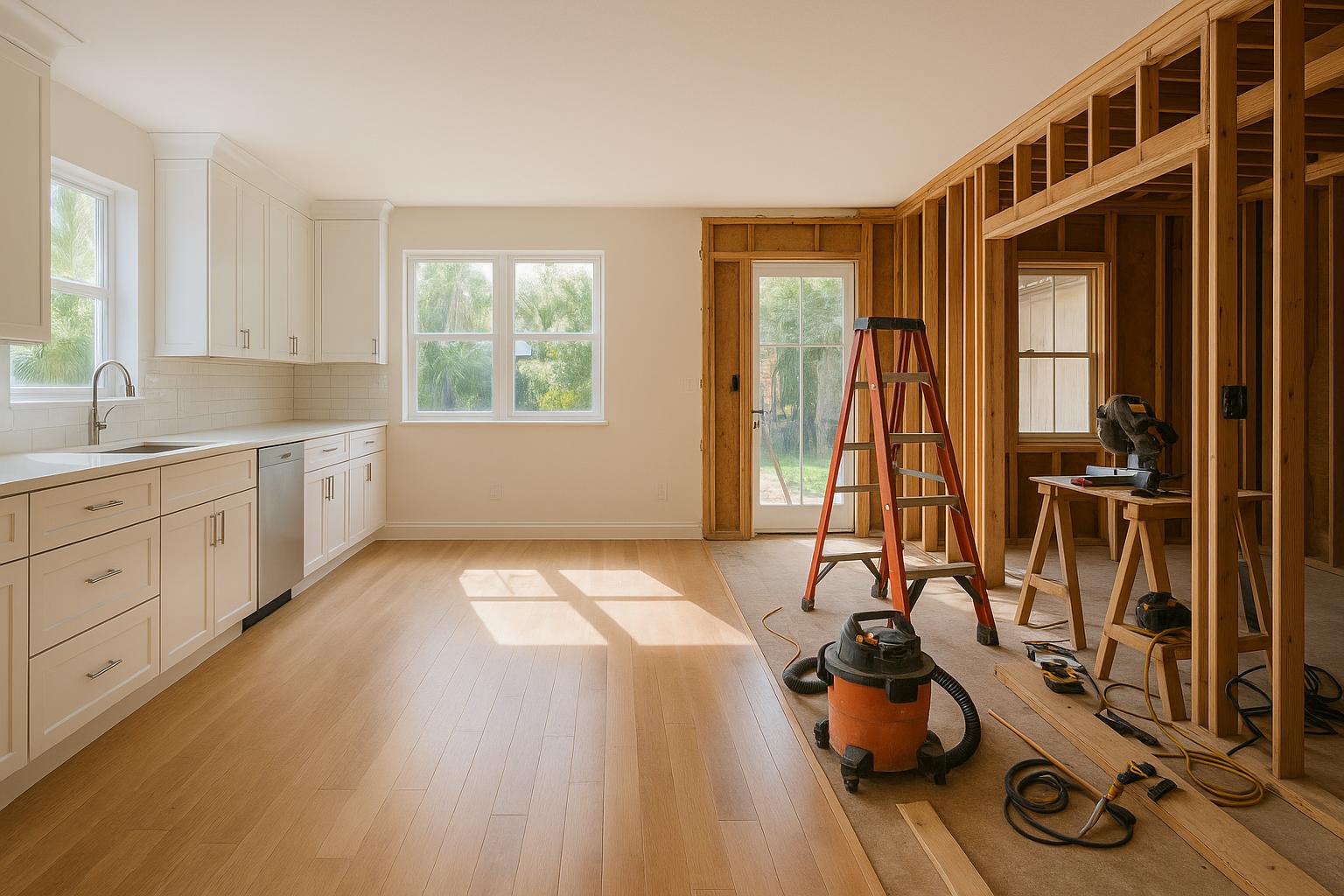
Why Whole-Home Remodeling Feels So Overwhelming
You know your home needs more than just a quick fix. The kitchen cabinets are outdated, the bathroom tile is cracking, the floors have seen better days, and the paint is peeling in nearly every room. When multiple spaces need attention at once, it's tempting to either tackle everything simultaneously or put it all off indefinitely.
For homeowners in Hollywood, FL, where humidity, salt air, and daily wear take a toll on interior finishes, whole-home remodeling isn't just about aesthetics — it's about protecting your investment. The good news is that with the right plan, you can renovate multiple rooms without chaos, budget blowouts, or months of living in a construction zone.
At Hearth & Home Remodeling, we've guided countless Hollywood homeowners through multi-room renovations. Here's the step-by-step approach we recommend.
Step 1: Define Your Priorities Before You Pick Up a Hammer
The biggest mistake homeowners make is diving into a whole-home remodel without a clear priority list. Not every room needs the same level of attention, and not every project needs to happen at the same time.
Start by walking through your home with a notebook and answering these questions for each space:
- Is this a safety or structural issue? Water damage, mold, faulty electrical — these come first, always.
- Does this space affect daily quality of life? A dysfunctional kitchen or a single bathroom shared by five people should rank high.
- Is this cosmetic or functional? Fresh paint and new flooring are important, but they can often wait until bigger projects are done.
- What's the return on investment? Kitchen and bathroom remodels consistently deliver the highest ROI if you're thinking about resale value.
Once you've ranked your rooms, you'll have a roadmap that keeps you focused and prevents scope creep — that sneaky tendency for projects to expand beyond what you originally planned.
Step 2: Set a Realistic Budget (and Add a Buffer)
Budgeting for a single room is straightforward. Budgeting for an entire home requires more discipline. Here's how to approach it wisely:
- Get estimates for each room separately. This lets you see where your money is going and make informed trade-offs.
- Allocate 15-20% as a contingency fund. In older Hollywood homes especially, opening up walls can reveal surprises like outdated plumbing or termite damage that needs addressing.
- Decide where to splurge and where to save. Custom cabinetry in the kitchen might be worth the investment, while standard-grade fixtures in a guest bathroom could save you thousands without sacrificing quality.
A reputable remodeling contractor will provide transparent, itemized estimates so you understand exactly what you're paying for. If a quote feels vague or too good to be true, that's a red flag.
Step 3: Phase Your Remodel Strategically
Unless you're moving out during the renovation, phasing is essential. The goal is to always have functional living space while work progresses.
Here's a phasing strategy that works well for most families:
- Phase 1 — Bathrooms: Start with bathrooms because they're smaller, faster to complete, and you need at least one functioning bathroom at all times. If you have two bathrooms, renovate one while using the other.
- Phase 2 — Kitchen: The kitchen is typically the most complex and disruptive project. Set up a temporary kitchen station in another room with a microwave, mini-fridge, and coffee maker. Most kitchen remodels take three to six weeks.
- Phase 3 — Flooring: Once the heavy construction is done in kitchens and bathrooms, install new flooring throughout the home. Doing flooring last prevents damage from construction traffic.
- Phase 4 — Painting and finishing: Interior painting and trim work should always be the final step. Fresh walls and ceilings tie everything together and give your home that finished, cohesive look.
This sequence minimizes disruption and ensures that earlier work doesn't get damaged by later projects.
Step 4: Choose Materials That Work for South Florida
Hollywood's tropical climate creates specific challenges for interior materials. High humidity can warp certain woods, and temperature fluctuations stress adhesives and grout. When selecting materials for your remodel, keep these tips in mind:
- Flooring: Porcelain tile, luxury vinyl plank, and polished concrete handle humidity far better than traditional hardwood. If you love the look of wood, engineered hardwood is a more stable alternative.
- Cabinetry: Solid wood and high-quality plywood with proper sealing outperform particleboard, which can swell and deteriorate in humid environments.
- Countertops: Quartz is an excellent choice for South Florida kitchens and bathrooms. It's non-porous, resistant to mold and mildew, and doesn't require the regular sealing that natural stone demands.
- Paint: Use mildew-resistant, high-quality interior paint with a satin or semi-gloss finish in moisture-prone areas like kitchens and bathrooms.
Choosing the right materials upfront saves you from premature replacements and costly repairs down the road.
Step 5: Hire One Contractor to Manage Everything
One of the smartest decisions you can make during a whole-home remodel is hiring a single contractor who can handle multiple trades. When you hire separate companies for cabinetry, flooring, countertops, and painting, you become the project manager — coordinating schedules, resolving conflicts, and chasing down subcontractors.
A full-service remodeling company like Hearth & Home Remodeling manages the entire process for you. We handle kitchen remodeling, bathroom remodeling, custom cabinetry, countertop installation, flooring, and interior painting under one roof. That means one point of contact, one timeline, and one team that's accountable for every detail.
For homeowners across Hollywood, Fort Lauderdale, Hallandale Beach, Pembroke Pines, Miramar, and Dania Beach, this approach saves time, reduces miscommunication, and typically costs less than piecing together multiple contractors.
Step 6: Communicate Clearly and Often
Even with the best contractor, communication is the glue that holds a successful remodel together. Before work begins, establish:
- A clear scope of work documented in writing
- A realistic timeline with milestones for each phase
- A communication schedule — weekly check-ins work well for most projects
- A process for handling changes — because changes will happen, and having a system prevents misunderstandings
Don't be afraid to ask questions. A good contractor welcomes them because it means you're engaged and invested in the outcome.
Your Home Deserves a Thoughtful Transformation
A whole-home remodel is one of the biggest investments you'll make as a homeowner. It's not something to rush into or leave to chance. With clear priorities, a realistic budget, a smart phasing plan, climate-appropriate materials, and a trusted contractor by your side, the process can actually be enjoyable.
If you're a homeowner in Hollywood thinking about transforming multiple rooms, Hearth & Home Remodeling is here to help you plan every step. We treat your home like our own — because that's the only way to deliver results that look great and last for years. Reach out to us for a free consultation, and let's talk about bringing your vision to life.